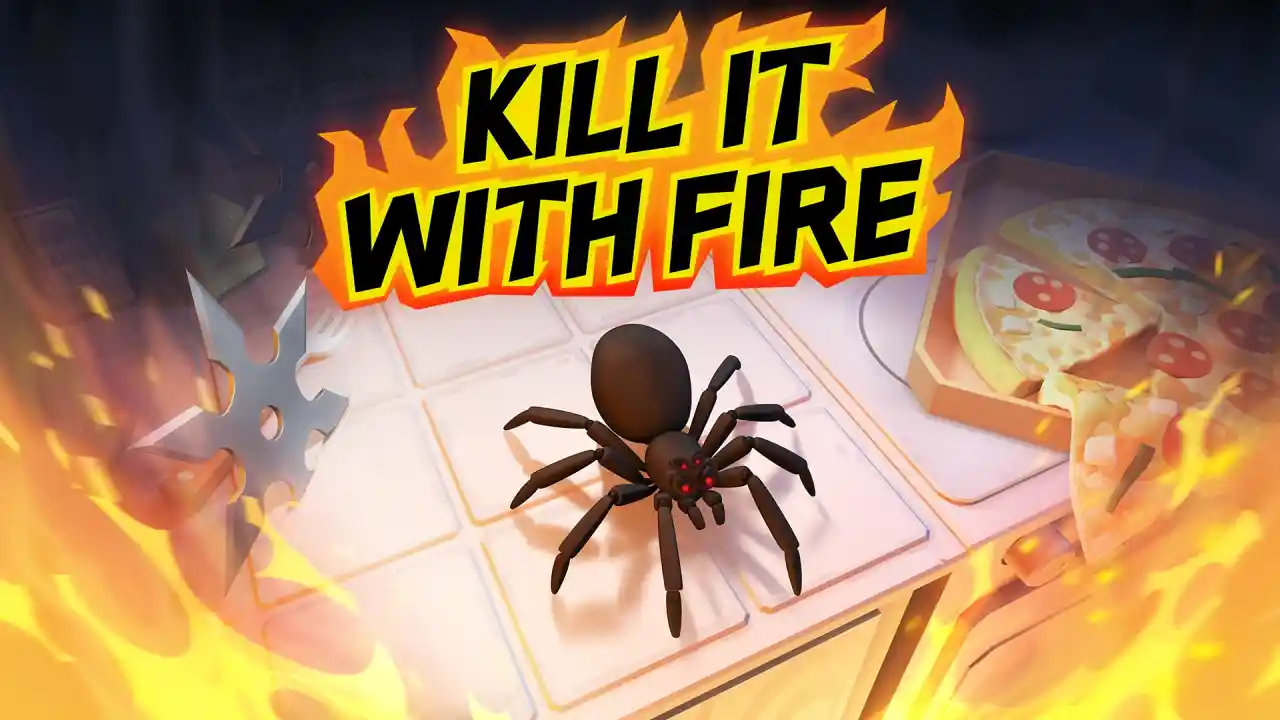
If you are terrified of spiders but want a hilarious way to face your fears, this article introduces your next obsession. Kill It With Fire is an absurd first-person action game that tasks you with one simple mission: exterminating the eight-legged freaks hiding all around your neighborhood. Standing out among casual PC games, this title takes an everyday phobia and turns it into an excuse for absolute destruction. Instead of just swatting pests with a rolled-up newspaper, you get to unleash a massive arsenal of over-the-top weaponry. It is a wacky, stress-relieving romp that actively encourages you to cause as much collateral damage as possible in your noble quest to squish every last bug.
Storyline
There isn't a deep, emotional narrative here, but rather a highly relatable premise taken to the absolute extreme. You step into the shoes of a local exterminator in a seemingly normal suburban town that is secretly infested with various types of spiders. From regular creepy-crawlies to explosive and web-shooting variants, these pests have taken over homes, convenience stores, and gas stations. Your entire journey revolves around tracking them down with a beeping radar device and moving from room to room to clean up the mess. There is no complex plot to follow—just you, your ridiculous weapons, and a burning desire to eradicate the spider menace completely.
Gaming Experience
When it comes to the gaming experience, this title delivers pure, unadulterated chaotic fun. The core loop consists of carefully lifting household objects to find where the spiders are hiding, and then instantly panicking when they suddenly scatter across the floor. You start with basic tools like a clipboard or a frying pan, but you quickly upgrade to shotguns, ninja stars, C4 explosives, and makeshift flamethrowers. The physics-based destruction is incredibly satisfying, as accidentally burning down a kitchen just to kill one tiny spider feels completely justified. It is a wildly entertaining sandbox experience that guarantees plenty of laughs every time you boot up your PC.